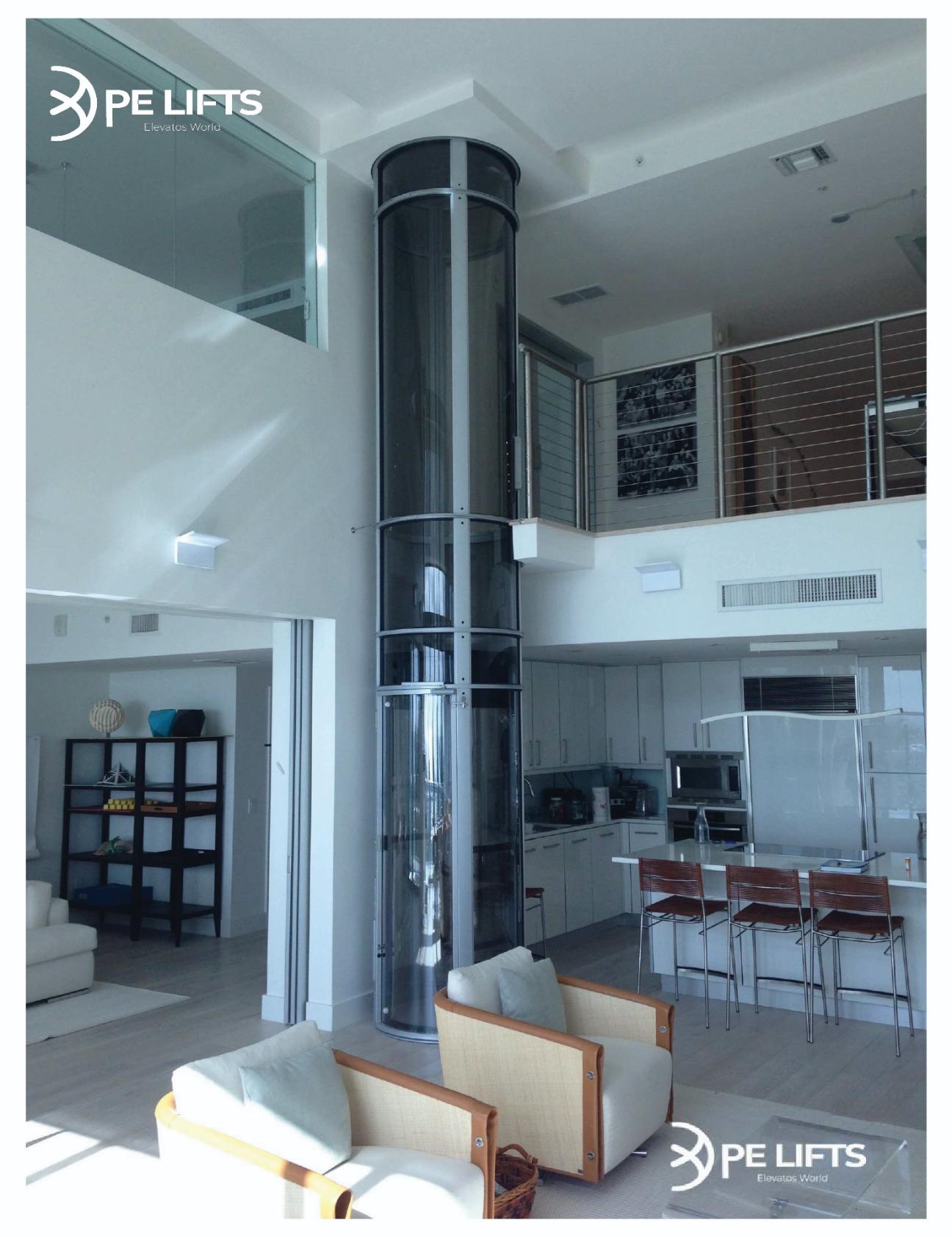
An elevator can make a multi-storey apartment building more accessible and convenient for residents. It can help older tenants, people with mobility difficulties, families with young children and visitors move between floors without relying entirely on stairs.
However, choosing an elevator for an apartment block requires more planning than selecting one for a private home. The equipment may be used by several households, visitors and building staff. This creates additional considerations around passenger capacity, shared access, safety procedures, maintenance and operating responsibilities.
For Nigerian property owners and estate developers, these decisions should be addressed before purchasing an elevator.
A pneumatic elevator is one technology that can be explored for suitable residential properties. Its distinctive installation arrangement may offer advantages for certain buildings, particularly where conventional shaft and machine-room requirements are difficult to accommodate. However, not every pneumatic model is designed for the frequency or passenger requirements of a shared apartment building.
This guide explains the questions owners, tenants and facility managers should consider when planning a pneumatic elevator for a Nigerian apartment block.
Does an Apartment Block Need a Dedicated Elevator?
The need for an elevator depends on the building's height, number of apartments, resident profile and how people use the property.
A low-rise apartment building with only a few households may have different access requirements from a larger residential development with several floors and many tenants.
Property owners should consider whether stairs create difficulties for residents and whether an elevator would improve access to essential parts of the building.
An apartment elevator may be particularly useful where:
- Elderly residents live on upper floors.
- Tenants have temporary or permanent mobility difficulties.
- Families regularly move children and household items between floors.
- Visitors need convenient access to upper-level apartments.
- The building is designed for long-term residential occupation.
- Accessibility is an important part of the property's value and usability.
The decision should be based on actual building needs rather than appearance alone.
Can a Pneumatic Elevator Serve a Nigerian Apartment Building?
Pneumatic elevators use air pressure differences to move a cabin vertically. Their self-supporting design differs from conventional elevator arrangements and may be worth assessing for selected residential buildings.
However, an important distinction must be made between a private home elevator and an elevator intended for shared apartment use.
A model suitable for a family duplex should not automatically be considered suitable for a building where multiple households may use it throughout the day.
Before choosing a pneumatic elevator for an apartment block, the owner and supplier should review:
- The number of residents expected to use it.
- The expected daily passenger traffic.
- The number of floors and required stops.
- The cabin's rated capacity.
- The frequency of operation.
- The manufacturer's permitted application.
- The maintenance and technical support arrangements.
The supplier should confirm whether the specific pneumatic model is approved and suitable for the proposed shared-use application.
Where the expected passenger volume exceeds the model's intended use, another elevator solution may be more appropriate.
What Should Property Owners Consider Before Choosing an Apartment Elevator?
The building owner or developer has an important role in defining the project requirements. The elevator should support the building's intended use without creating unnecessary operational difficulties.
1. Number of Floors and Apartments
Start by identifying how many floors the elevator needs to serve and how many residential units are located on each level.
A building with a small number of apartments may have relatively low passenger demand. A larger development may experience several residents wanting to use the elevator at the same time, particularly during morning and evening periods.
The supplier needs this information to assess whether the proposed elevator model is suitable.
2. Expected Passenger Traffic
Shared residential buildings have different usage patterns from private homes.
Consider the number of tenants, visitors, domestic staff and facility personnel who may use the elevator.
Also consider whether residents frequently receive deliveries or move bulky household items. A passenger elevator should not be assumed suitable for transporting heavy furniture or oversized loads unless the manufacturer permits that use.
3. Available Installation Space
Existing apartment buildings may have limited space for additional equipment.
The proposed location should be assessed for its available footprint, floor conditions, ceiling clearance, landing access and electrical requirements.
Pneumatic elevators may avoid some conventional shaft and machine-room arrangements, depending on the model. However, they still require specific installation conditions that must be confirmed through a technical survey.
4. Long-Term Building Plans
Consider whether the apartment block may be expanded, renovated or converted to another use.
An elevator should be selected based on the building's intended long-term operation, not only its current occupancy.
Discuss future changes with the supplier before finalising the model and installation position.
How Should an Apartment Elevator Support Tenant Accessibility?
Accessibility should be considered from the beginning of the planning process.
Residents may have different mobility requirements. Some may walk independently but find stairs difficult, while others may use wheelchairs or require assistance from caregivers.
A residential building lift should be evaluated according to the people expected to use it.
Wheelchair Access
If wheelchair users will live in the apartment block, the owner should confirm the cabin dimensions, entrance clearance and available positioning space.
The wheelchair must be able to enter and exit safely. If a caregiver needs to travel alongside the user, the cabin must provide sufficient space for both.
Do not assume that every pneumatic elevator model accommodates every wheelchair type. Obtain the exact technical dimensions and assess them against the intended users' needs.
Elderly Residents
Older residents may need convenient access to the elevator controls and landings.
Consider the walking distance from each apartment to the elevator, the ease of entering and exiting the cabin and whether the controls are suitable for the intended users.
Families and Visitors
Families with young children and visitors may also benefit from improved vertical access.
However, residents should understand the approved passenger capacity and basic operating rules to prevent overloading or misuse.
Accessible Building Routes
An elevator alone does not make an apartment building fully accessible.
The route from the main entrance to the elevator, the landing areas and access to individual apartments should also be reviewed.
What Tenant Safety Rules Should Be Established?
An apartment elevator is a shared facility. Residents should understand how to use it properly and what to do if it stops unexpectedly.
The property owner or facility manager should provide clear operating instructions and display relevant safety information where residents can access it.
Important rules may include:
- Follow the manufacturer's passenger capacity limit.
- Do not force elevator doors open.
- Keep children from playing with elevator controls.
- Do not tamper with safety components.
- Report unusual sounds or operating behaviour.
- Keep the entrance and landing areas clear.
- Follow the approved emergency procedure during a power interruption.
Residents should also know how to contact the facility manager or elevator support team.
For a pneumatic elevator, emergency procedures must be specific to the installed model. Do not assume that every model has the same automatic descent function or power-failure response.
Who Should Be Responsible for Apartment Elevator Maintenance?
Maintenance responsibilities should be established before the building becomes occupied.
Unlike a private home elevator, a shared apartment lift may experience use from several households throughout the day. This makes a clear service arrangement important.
The owner, estate manager or facility management company should understand the manufacturer's recommended maintenance schedule and ensure that servicing is arranged accordingly.
A maintenance agreement should clarify:
| Maintenance area | What should be agreed |
|---|---|
| Routine servicing | Recommended maintenance frequency |
| Technical inspections | What components and functions are checked |
| Emergency support | How residents report an elevator problem |
| Repairs | Who authorises and coordinates repairs |
| Spare parts | How replacement components are sourced |
| Service records | How completed maintenance is documented |
| Costs | Who pays for routine servicing and repairs |
For properties in Lagos, Abuja, Port Harcourt and other Nigerian cities, confirm the actual technical support arrangements available for the building's location.
Do not assume that a supplier's presence in Nigeria guarantees immediate attendance at every property. Ask about service coverage and response arrangements in writing.
How Should Elevator Costs Be Shared Among Apartment Tenants?
Shared elevator ownership can create disagreements if payment responsibilities are not explained.
Before installation, the property owner or estate management team should decide how the costs will be handled.
Possible cost categories include:
- Initial elevator purchase and installation.
- Routine maintenance.
- Repairs and replacement components.
- Electrical supply.
- Emergency technical support.
- Any approved building modifications.
For rental properties, the owner should clarify which costs are the landlord's responsibility and whether any operating expenses form part of the agreed service charge.
For owner-occupied apartment developments, the residents' association or management company may establish a contribution arrangement.
The important point is transparency. Residents should understand how shared elevator expenses are calculated and who is responsible for approving major repairs.
What Should Facility Managers Know About Daily Elevator Operation?
The facility manager plays an important role in keeping the shared elevator organised and ensuring that residents understand its operating requirements.
Daily management does not mean carrying out technical repairs. It means monitoring the facility, communicating with residents and arranging qualified support when necessary.
A facility manager should:
- Keep the elevator support contact available.
- Display passenger capacity information.
- Ensure residents can access emergency instructions.
- Record reported faults and unusual behaviour.
- Coordinate maintenance appointments.
- Keep the elevator's service records.
- Communicate planned maintenance or temporary service interruptions.
The facility manager should never attempt technical repairs or instruct untrained residents to carry out a rescue.
What Building Requirements Should Be Checked Before Installation?
Before selecting an apartment elevator, arrange a technical assessment of the proposed installation location.
For a pneumatic elevator, the assessment should establish whether the building can accommodate the selected model.
| Assessment area | What needs to be checked |
|---|---|
| Installation footprint | Available width and length |
| Floor conditions | Whether the installation surface meets model requirements |
| Ceiling clearance | Required overhead space |
| Number of stops | Whether the model supports the required floors |
| Landing access | Safe entry and exit at each level |
| Electrical supply | Compatibility with the model's requirements |
| Passenger capacity | Suitability for expected shared use |
| Installation access | How equipment and technicians will reach the location |
| Maintenance access | Whether servicing can be carried out safely |
Any proposed structural modification should be reviewed by the appropriate building professionals.
Do not assume that a pneumatic elevator's reduced shaft or pit requirements mean that an existing apartment building is automatically ready for installation.
What Should Developers Include in an Apartment Elevator Quote?
A quotation should explain what is being supplied and what the project owner is expected to provide.
When requesting a building quote, share the number of floors, apartment count, expected users and proposed installation location.
Ask the supplier to clarify:
- Exact elevator model and configuration.
- Rated passenger capacity.
- Cabin and entrance dimensions.
- Number of stops.
- Installation requirements.
- Electrical requirements.
- Included delivery and installation services.
- Warranty terms.
- Maintenance arrangements.
- Any exclusions or additional costs.
If the building is still under construction, provide the architectural drawings. This can help the technical team review the proposed location before construction decisions become difficult to change.
Frequently Asked Questions
Can a pneumatic elevator be installed in a Nigerian apartment block?
It may be suitable for certain residential buildings, but the specific model must be assessed for shared-use requirements, passenger traffic, capacity, number of stops and building conditions. A model designed for private residential use should not automatically be assumed suitable for a multi-tenant property.
Is a pneumatic elevator suitable for a Lagos estate?
A pneumatic elevator may be worth exploring for a suitable residential property in Lagos. However, the owner should confirm the building layout, expected usage, technical requirements and available maintenance support before making a decision.
How many people can use an apartment pneumatic elevator at once?
This depends on the selected model's rated capacity and cabin dimensions. Ask the supplier for the technical specifications and confirm whether the proposed passenger arrangement is appropriate for the building.
Who pays for apartment elevator maintenance?
The payment arrangement depends on the property's ownership and management structure. In rental properties, the landlord or property manager should clarify responsibilities. In jointly owned developments, residents may contribute through an agreed service charge or maintenance arrangement.
Can an apartment elevator be added to an existing building?
Possibly. A technical survey should review the available installation space, floor conditions, clearances, electrical supply and landing arrangements before a model is recommended.
What happens if the apartment elevator stops during a power failure?
Residents should follow the emergency instructions for the installed model, use the approved communication system and contact the designated support team. They should never force the doors open or attempt an untrained rescue.
Request a Multi-Unit Consultation for Your Apartment Building
Planning an elevator for an apartment block requires more than selecting equipment that fits into the available space. Owners must consider shared passenger use, tenant accessibility, safety communication, maintenance responsibilities and long-term operating costs.
A pneumatic elevator may be an option for suitable residential applications, but its intended use and capacity must match the building's requirements. This is particularly important where several households will depend on the elevator every day.
PE Lifts can help property owners and developers explore pneumatic elevator options and identify the information required for a technical assessment.
Planning an apartment elevator in Nigeria? Request a multi-unit consultation with PE Lifts. Share your building location, number of floors, apartment count and expected passenger requirements so the team can assess suitable options.