
The architectural silhouette of Nigeria is changing. From the high-rise luxury apartments overlooking the Atlantic in Victoria Island to the sprawling commercial hubs of Abuja and the industrial estates of Port Harcourt, verticality is the new standard. As our cities grow upward rather than outward, elevator lifts have transitioned from being a symbol of extreme wealth to an indispensable utility for modern living and business.
At ng.pelifts.com, we understand that choosing an elevator is about more than just moving between floors; it’s about safety, reliability, and enhancing the value of your property. This guide provides an in-depth look at everything you need to know about elevator lifts in the Nigerian context.
1. The Evolution of Elevator Lifts in the Nigerian Market
For decades, elevators were primarily found in government buildings or five-star hotels in Lagos. However, the current real estate boom has democratized this technology. Today, "home lifts" are becoming standard in 4-bedroom duplexes, and "passenger lifts" are a requirement for any commercial building exceeding two floors.
The demand for elevator lifts in Nigeria is driven by three main factors:
Urban Density: Limited land in prime areas like Ikoyi and Lekki necessitates taller buildings.
Inclusivity: A growing awareness of the needs of the elderly and people with disabilities.
Property Appreciation: High-end buyers now expect smart vertical transportation as a standard feature.
2. Types of Elevator Lifts: Finding Your Perfect Fit
Not all elevator lifts are created equal. The mechanical requirements for a warehouse are vastly different from those of a luxury penthouse.
A. Passenger Elevator Lifts
These are the workhorses of the industry. Designed to carry people safely and quickly, they are found in office complexes, hotels, and apartments. Modern passenger lifts prioritize "ride quality"—the smoothness of the start and stop—and "waiting time" efficiency.
B. Residential / Home Lifts
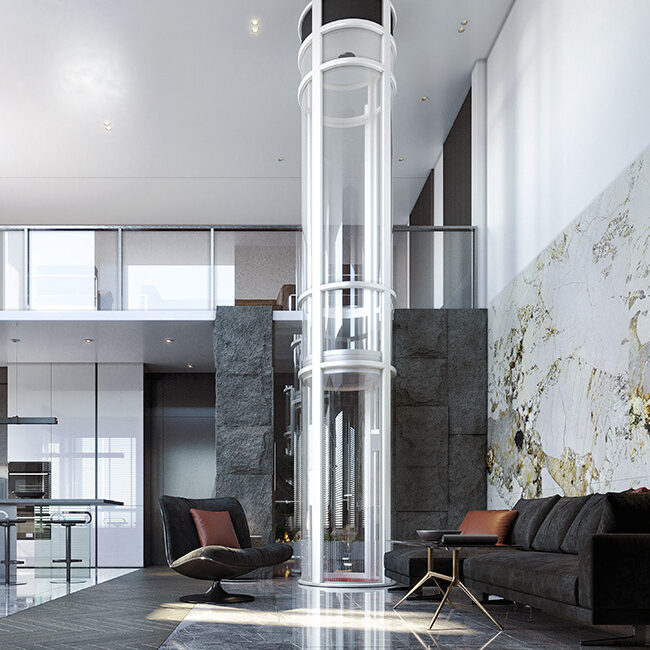
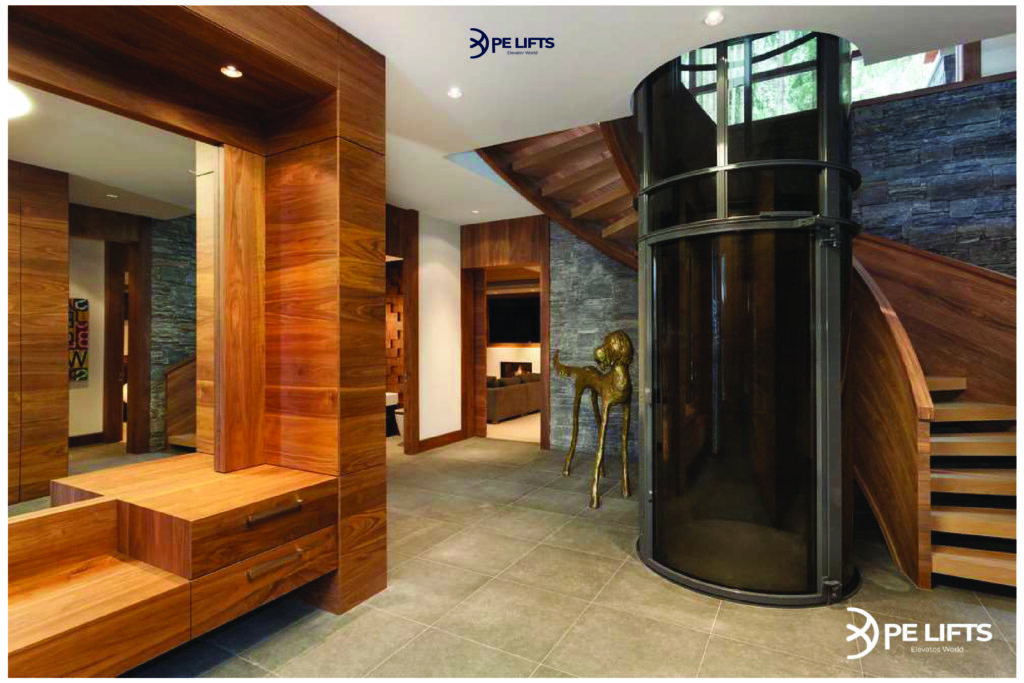
Specifically engineered for private residences, these lifts often require less overhead space and a shallower pit. They are designed to blend into home interiors, often featuring glass walls or customized wood paneling.
C. Machine Room-Less (MRL) Lifts
In the past, elevators required a bulky "machine room" at the top of the building. MRL elevator lifts house the machinery within the hoistway itself. This is a game-changer for Nigerian developers who want to maximize rooftop space for penthouses or recreational areas.
D. Freight and Cargo Lifts
Built for the "tough" jobs, these lifts are found in shopping malls and manufacturing plants. They feature reinforced floors and heavy-duty doors to withstand the impact of forklifts and heavy pallets.
3. The Technology Behind the Lift: Traction vs. Hydraulic
When you consult with the team at PE Lifts, one of the first technical decisions will be the drive system.
Traction Elevator Lifts
How they work: Use cables and counterweights.
Best for: Mid-to-high-rise buildings.
Pros: Extremely energy-efficient and capable of high speeds.
Cons: Higher initial installation cost compared to hydraulics.
Hydraulic Elevator Lifts
How they work: A piston at the bottom of the lift pushes the cab up.
Best for: Low-rise buildings (2–5 floors).
Pros: Very smooth ride and high lifting capacity for heavy weights.
Cons: Slower than traction and requires more oil maintenance.
4. Why Nigerian Climate and Infrastructure Matter
Installing elevator lifts in Nigeria requires a specialized approach that many international firms overlook. At ng.pelifts.com, we focus on "tropicalized" engineering.
The Power Challenge (The ARD Solution)
Consistent power is a challenge in many parts of Nigeria. A sudden blackout while someone is in the lift is a major safety concern. This is why we prioritize the Automatic Rescue Device (ARD). In the event of a power failure, the ARD uses battery power to move the lift to the nearest floor and open the doors automatically, ensuring no one is ever trapped.
Humidity and Salinity
In coastal cities like Lagos and Port Harcourt, the salt-heavy air can corrode standard metal components in months. We utilize high-grade stainless steel and moisture-resistant control panels to ensure the longevity of your elevator lift.
5. Safety Standards: Non-Negotiable Features
Safety is the cornerstone of everything we do. Every lift we install complies with international safety codes (such as EN81) and local Nigerian building regulations.
Overload Sensors: The lift simply will not move if it exceeds its weight capacity.
Infrared Door Curtains: These sensors create an invisible "light curtain" across the entrance; if a hand or an object breaks the curtain, the doors immediately reopen.
Emergency Intercom: Direct communication from the cab to a 24/7 security or maintenance desk.
Fire-Rated Doors: To prevent the spread of smoke and fire between floors.
6. The ROI of Elevator Lifts: Is It Worth It?
Property developers often ask about the Return on Investment. The data is clear:
Increased Rental Value: Apartments on higher floors with elevator access can rent for 30% to 50% more than those without.
Marketability: In a competitive real estate market, a building with a reliable elevator lift sells faster.
Future-Proofing: As the owner ages, a home lift ensures they can stay in their home comfortably for a lifetime, adding massive long-term value.
7. Maintenance: Protecting Your Investment
An elevator lift is a complex piece of heavy machinery. It requires "preventative maintenance" rather than "reactive maintenance."
At PE Lifts, our maintenance packages include:
Regular Lubrication: Reducing wear and tear on moving parts.
Safety Tests: Regular checks of the braking system and governor.
Software Updates: Ensuring the lift’s "brain" is running the most efficient dispatch algorithms.
Pro Tip: Never use an unlicensed technician for your lift. Many "cheap" repairs lead to catastrophic failures. Always stick with the authorized provider who knows the specific wiring and logic of your system.
8. Trends in Modern Elevator Design
Today's elevator lifts are "smart."
Touchless Technology: Call the lift or select your floor using a smartphone app or gesture control—highly hygienic and modern.
Panoramic Glass: For hotels and malls, glass lifts offer a stunning view, turning a simple ride into an experience.
Energy Regeneration: Some of our traction lifts can actually generate electricity during the braking process, feeding it back into the building’s power grid.
9. Why Choose PE Lifts Nigeria?
Choosing a partner for your vertical transportation needs is a significant decision. Here is why developers across Nigeria trust PE Lifts:
Local Expertise: we understand the Nigerian grid, the weather, and the building codes.
Rapid Response: We maintain a local inventory of spare parts, meaning you don’t have to wait months for a part to be shipped from Europe or Asia.
Customization: We don't believe in "one size fits all." We design the lift cabin, the speed, and the capacity specifically for your building's traffic patterns.
10. Frequently Asked Questions (FAQs)
Q: How much space do I need for a home elevator lift?
A: You’d be surprised! Modern compact lifts can fit into a space as small as 1.5m x 1.5m.
Q: Can I install an elevator in an old building?
A: Yes. We specialize in retrofitting. We can build an external glass hoistway or find space within an existing stairwell.
Q: How long does the installation process take?
A: Generally, from the moment the equipment arrives on-site, a standard installation takes 4 to 6 weeks.
Contact Us: Start Your Vertical Journey Today
Don't let your building be limited by its stairs. Whether you are building a new residential duplex, a commercial plaza, or an industrial facility, PE Lifts is your dedicated partner for world-class elevator lifts in Nigeria.
Our team of engineers is ready to provide you with a comprehensive site assessment and a quote tailored to your budget and aesthetic preferences.
Get In Touch
Website: https://ng.pelifts.com
Email: info@pelifts.com / sales@pelifts.com
Phone: +2349074935455
Would you like me to schedule a free technical consultation for your project? Visit our website today and let’s take your property to the next level.
For the reason that the admin of this site is working, no uncertainty very quickly it will be renowned, due to its quality contents.
I appreciate you sharing this blog post. Thanks Again.
wow i really enjoy reading this, do you post often ?
wow your article is simply a masterpiece, i like that, keep it up and will be checking for new update. do you post often?
wow your article is simply a masterpiece, i like that, keep it up and will be checking for new update. do you post often?