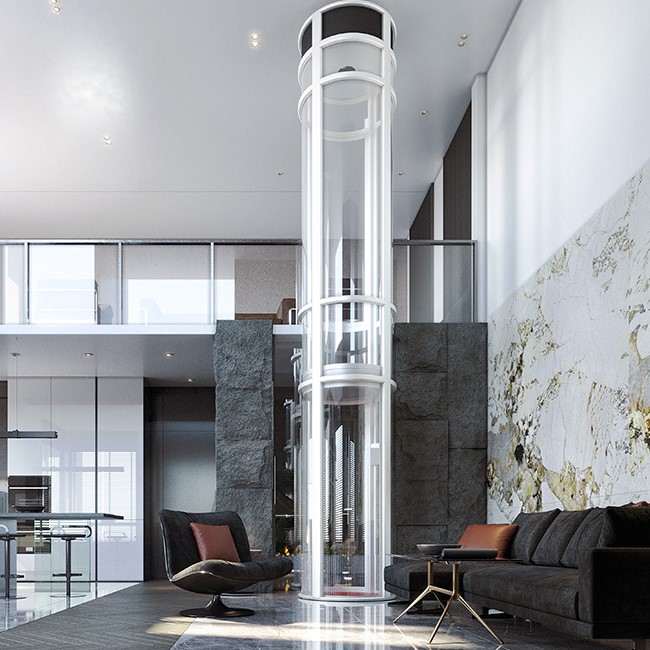
As more Nigerians invest in duplexes, luxury homes, and multi-storey residences, accessibility is becoming an important part of home design. Whether you're planning for ageing parents, supporting a loved one with mobility challenges, or simply future-proofing your property, you may be wondering which solution is best: a home elevator or a stair lift.
While both systems help people move between floors, they are designed for different needs. Understanding how they compare can help you make the right investment for your home and your family's future.
Understanding the Two Options
Although they serve a similar purpose, home elevators and stair lifts operate differently.
A stair lift consists of a motorised chair that moves along a rail attached to your staircase. It carries one seated passenger at a time.
A home elevator is a fully enclosed lift that travels vertically between floors, allowing passengers to remain standing, seated, or in a wheelchair, depending on the model.
For many Nigerian homeowners, the choice comes down to convenience, accessibility, long-term value, and lifestyle.
Which Option Is Better for Everyday Living?
If your goal is to make life easier for the whole family, a home elevator offers greater flexibility.
A residential elevator can comfortably transport:
- Elderly parents
- Children
- Wheelchair users
- People using walking aids
- Groceries and shopping bags
- Luggage
- Laundry baskets
- Household items
A stair lift, however, is designed primarily for one individual and cannot carry large items or accommodate multiple passengers.
For busy households, this difference becomes noticeable every day.
Accessibility for Elderly Family Members
In many Nigerian families, several generations live under one roof. As parents and grandparents age, climbing stairs can become difficult due to arthritis, reduced balance, or other mobility challenges.
A home elevator allows elderly family members to move safely and independently between floors without transferring into a chair.
A stair lift requires users to sit down, fasten a seat belt, and safely get on and off the chair at each level. This process may become increasingly difficult as mobility changes.
For long-term accessibility, a home elevator is often the more practical choice.
Wheelchair Accessibility
This is one of the biggest differences between the two systems.
Many home elevators are available in wheelchair-accessible models, allowing users to enter and exit without leaving their wheelchair.
Standard stair lifts cannot accommodate wheelchairs and require users to transfer from the wheelchair to the lift seat.
For homeowners planning ahead or supporting someone with limited mobility, a residential elevator provides a more inclusive solution.
Safety Comparison
Safety is a major concern for every homeowner.
Modern home elevators include advanced safety features such as:
- Automatic emergency descent during power outages
- Backup battery systems
- Emergency alarm buttons
- Door safety interlocks
- Interior lighting
- Cabin ventilation
- Smooth, stable travel
Stair lifts also include safety features like seat belts and obstacle sensors, but users must still safely transfer onto and off the chair.
For elderly individuals with reduced balance, this can increase the risk of falls.
Space and Installation
Many people assume a home elevator requires extensive renovations.
Thanks to modern technology, many residential elevators have compact designs and can be installed in both new and existing Nigerian homes with minimal structural changes.
A stair lift uses the existing staircase, but it also occupies part of the stairway. In narrower homes, this may reduce walking space for other occupants.
A professional site assessment will determine the best solution based on your property's layout.
Style and Home Design
If aesthetics matter, a home elevator offers a clear advantage.
Modern residential elevators feature:
- Panoramic glass cabins
- Contemporary finishes
- Customisable colours
- Elegant lighting
- Premium interior designs
Instead of hiding the lift, homeowners often make it a focal point of their home's architecture.
Stair lifts are functional, but they are designed primarily for practicality rather than appearance.
Long-Term Property Value
A home elevator is more than a mobility solution—it's a property upgrade.
As demand for accessible and future-ready homes increases across Nigeria, residential elevators are becoming attractive features for buyers seeking convenience, luxury, and long-term usability.
A stair lift can improve accessibility for a specific user, but it generally does not add the same level of appeal or value to a property.
Cost vs Long-Term Investment
A stair lift usually has a lower initial cost, making it suitable for short-term mobility needs.
A home elevator requires a larger upfront investment but provides significantly greater long-term value by:
- Serving the entire household
- Supporting changing mobility needs
- Enhancing home aesthetics
- Increasing property value
- Improving daily convenience
For families planning to stay in their home for many years, the long-term benefits often outweigh the initial investment.
Frequently Asked Questions
Which is better for elderly parents?
If your parents need ongoing mobility support or use walking aids or wheelchairs, a home elevator is generally the safer and more comfortable option.
Can I install a home elevator in an existing Nigerian home?
Yes. Many modern residential elevators are designed for retrofit installations and can be fitted into existing homes after a professional assessment.
Does a stair lift work for wheelchair users?
Most standard stair lifts do not. Wheelchair users usually require a wheelchair-accessible home elevator.
Which option increases property value?
A home elevator typically adds greater long-term value because it improves accessibility, enhances luxury, and appeals to a wider range of future buyers.
Final Thoughts
Choosing between a home elevator and a stair lift depends on your family's needs, your home's design, and your plans for the future.
If you need a simple solution for one individual, a stair lift may meet your immediate requirements. However, if you're looking for a modern, elegant, and long-term accessibility solution that benefits the entire household, a PE Lifts home elevator is the better investment.
It offers superior comfort, improved safety, wheelchair accessibility, and lasting value—making it an ideal choice for today's Nigerian homes.
Ready to Choose the Right Accessibility Solution?
Every home is unique, and selecting the right mobility solution starts with expert advice.
Book a professional home assessment with PE Lifts Nigeria today. Our experienced team will assess your property, understand your family's needs, and recommend the ideal home elevator solution that combines safety, style, and long-term value. Let us help you build a home that's accessible today and ready for tomorrow.