Introduction: Why Elevator Maintenance is Essential in Nigeria
In the rapidly evolving urban landscapes of Lagos, Abuja, and Port Harcourt, elevators have transitioned from being a luxury to a critical infrastructure component. Whether it is a high-rise apartment in Lekki, a commercial office in Victoria Island, or a private villa in Maitama, the reliability of your lift system directly impacts daily productivity and safety. However, the Nigerian environment presents unique challenges—ranging from inconsistent power supply and voltage surges to high humidity in coastal regions and dust during the Harmattan season.
Regular elevator maintenance is not merely about keeping the car moving; it is about protecting a significant capital investment and ensuring the safety of every passenger. In the Nigerian context, where the replacement of imported components can be delayed by logistical hurdles and foreign exchange fluctuations, preventive care becomes even more critical. Neglecting a maintenance schedule in Nigeria often leads to premature component failure, especially in complex traction systems that are sensitive to the nation’s environmental stressors.
The infrastructure realities in cities like Lagos and Abuja require a specialized approach. For instance, the high salt content in the air along the Lekki-Ajah corridor can accelerate the corrosion of guide rails and hoisting cables if not properly lubricated and inspected. Similarly, the intense dust of the Harmattan season in Northern Nigeria can infiltrate sensitive control panels, leading to short circuits and sensor malfunctions. By prioritizing professional elevator maintenance services Nigeria, building owners can avoid the astronomical costs of emergency repairs, extend the operational life of their equipment by decades, and ensure their systems remain fully compliant with the stringent safety standards set by local regulatory bodies. Investing in maintenance is not just a recurring cost; it is a strategic decision to safeguard the value of the property and the well-being of its occupants.
What are the types of elevator maintenance?
Understanding the different approaches to service is vital for any property manager or homeowner. Maintenance typically falls into three primary categories, each serving a distinct purpose in the lifecycle of the equipment.
| Maintenance Type | Description | Primary Goal |
| Preventive Maintenance | Scheduled inspections and minor adjustments performed at regular intervals. | To prevent breakdowns before they occur by identifying wear and tear early. |
| Corrective Maintenance | Repairs performed after a fault or failure has been identified during an inspection. | To restore the elevator to its optimal working condition after a specific part fails. |
| Emergency Repair | Urgent intervention required due to sudden failure or passenger entrapment. | To resolve critical safety issues and restore service as quickly as possible. |
For most buildings in Nigeria, a hybrid approach centered on preventive care is the most cost-effective. This is particularly true for pneumatic elevator maintenance Nigeria, where the simplicity of the vacuum technology allows for highly efficient preventive cycles compared to traditional hydraulic or traction lifts.
What does a maintenance programme include?
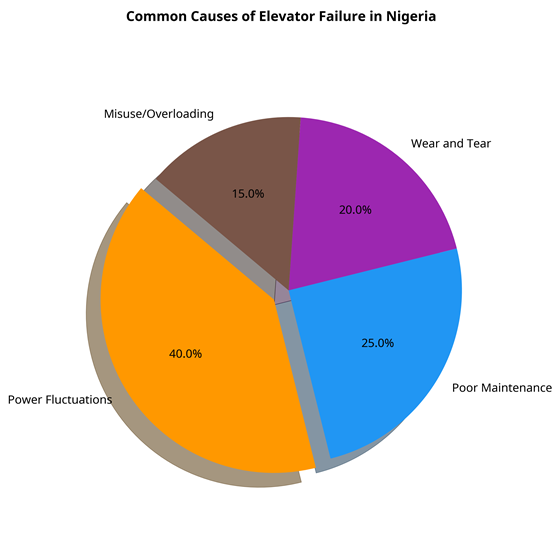
Common Causes of Elevator Failure
A comprehensive maintenance programme is designed to cover every mechanical and electronic aspect of the lift. In Nigeria, special attention must be paid to the electrical components due to the frequent “brownouts” and power spikes that can fry sensitive circuit boards.
A standard programme typically includes: 1. Safety Testing: Testing the governor, emergency brakes, and door sensors to ensure they trigger correctly during a fault. 2. Cleaning and Lubrication: For traditional lifts, this involves oiling rails and cables. For pneumatic (vacuum) home elevators (PVE models), the focus is on cleaning the cylinder walls and checking the turbine seals. 3. Electrical Audit: Inspecting the controller, inverter, and backup power systems (UPS/ARD) to ensure they are ready to take over during a power failure. 4. Performance Tuning: Adjusting door opening speeds, floor leveling accuracy, and ride smoothness.
Pneumatic elevators are particularly favored in Nigerian residential estates because they require no oils or lubricants, making the maintenance programme much cleaner and less frequent.
How does an annual maintenance contract work in Nigeria?
An annual elevator maintenance contract Nigeria (AMC) is a formal agreement between a building owner and an elevator servicing company Nigeria. This contract provides peace of mind by guaranteeing a set number of service visits per year and prioritizing the building for emergency calls.
Most AMCs in Nigeria are structured as either “Oil and Grease” (basic) or “Full Comprehensive” (including parts). In high-traffic areas like Lagos offices, a comprehensive contract is often preferred to hedge against the fluctuating costs of imported spare parts. The contract ensures that a certified technician visits the site monthly or quarterly to perform the necessary safety checks, significantly reducing the “Cost of Elevator Maintenance Nigeria” over the long term by preventing major motor or controller burnouts.
Which areas are covered?
Our service network is strategically positioned to support the major economic hubs of the country. We understand that local geography influences maintenance needs.
- Lagos: We provide lift maintenance services Lagos, covering the high-density apartments in Lekki, the corporate towers of Victoria Island, and the residential estates in Ikeja. In Lagos, we specifically focus on anti-corrosion treatments for elevators near the Atlantic coast.
- Abuja: Our teams service modern developments and luxury villas in Asokoro, Maitama, and Garki. Here, maintenance routines include rigorous dust filtration checks to combat the effects of the Harmattan season.
- Port Harcourt: We support commercial and residential buildings in the Garden City, ensuring that elevators in oil and gas corporate offices maintain 100% uptime.
How fast is emergency elevator repair in Nigeria?
When a lift fails, time is of the essence. Emergency elevator repair Lagos and other major cities is a core part of our service delivery. We maintain a 24/7 rapid response team because we understand the risks of entrapment in the Nigerian heat.
Our response times are optimized through localized dispatching. In Lagos, for instance, we have technicians stationed across the mainland and island to bypass traffic bottlenecks. For clients with a preventive elevator maintenance Nigeria plan, emergency response is typically guaranteed within 2 to 4 hours, depending on the location.
Which elevators do we service?
While we provide comprehensive elevator repair services Nigeria for all major brands and technologies, we specialize in the latest energy-efficient systems.
The Pneumatic Elevator Priority: A Modern Solution for Nigeria
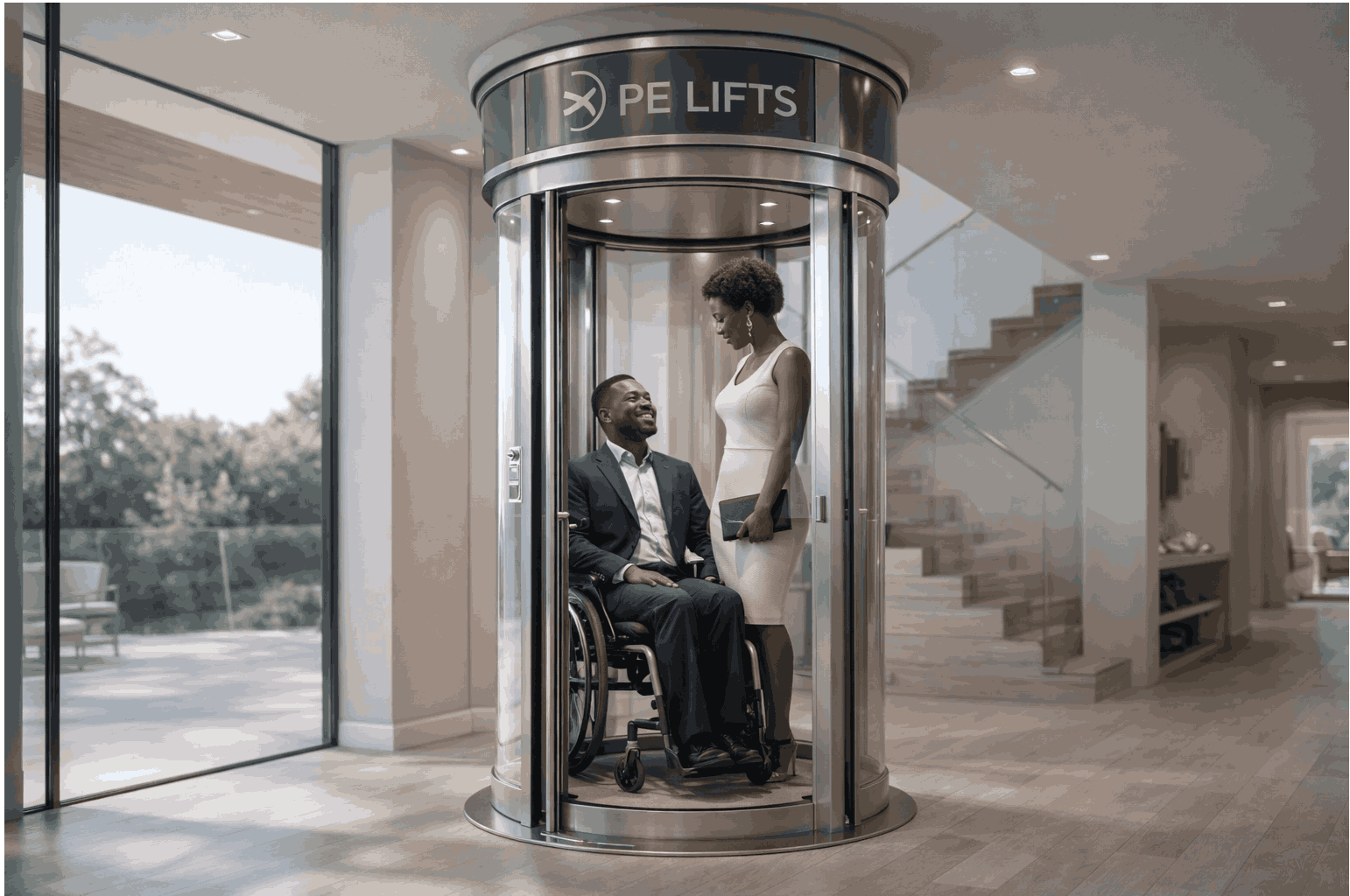
While we provide comprehensive elevator repair services Nigeria for all major brands and technologies, we specialize in the latest energy-efficient systems that are uniquely suited to the Nigerian residential market. We are the leading experts in home elevator maintenance Nigeria for Pneumatic Vacuum Elevators (PVE). These models, including the PVE30, PVE37, and PVE52, have become the gold standard for Nigerian luxury homes and estates for several compelling reasons.
The primary advantage of a PVE system is its revolutionary design. Unlike traditional lifts, these elevators operate using air pressure, meaning they have no cables, pulleys, or pistons. This lack of complex mechanical parts translates directly into low maintenance requirements. For a busy homeowner in an estate like Banana Island or Maitama, this means fewer interruptions and lower long-term costs. The first major service—which typically involves replacing the main seal—isn’t usually required until after five years of operation or 15,000 lifts. This is a stark contrast to traditional systems that may require monthly lubrication and cable tensioning.
Furthermore, PVE models address the most significant challenge in Nigeria: power reliability. These elevators are incredibly power-efficient, consuming energy only during the ascent. During descent, they utilize gravity, allowing the car to safely return to the ground floor even during a total power failure without the need for complex battery backup systems. Their “plug-and-play” nature also means they require no machine room or pit, allowing them to be installed in existing duplexes and penthouses with minimal structural modification. We also service traditional traction and hydraulic lifts, ensuring that your home elevator maintenance Nigeria needs are met regardless of the technology used, but for the modern Nigerian homeowner, the pneumatic option offers unparalleled peace of mind.
Why does maintenance save money?
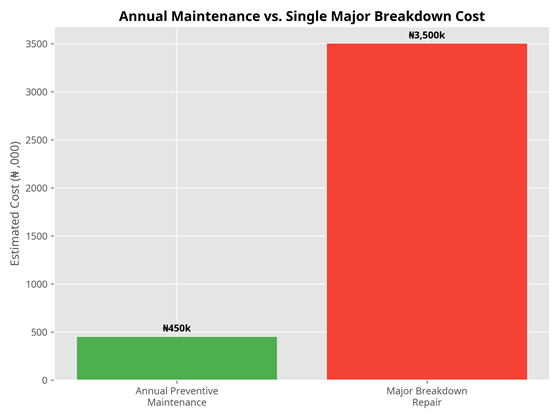
Maintenance vs Breakdown Cost
The “Cost of Elevator Maintenance Nigeria” is often viewed as an expense, but it is actually a significant saving mechanism that protects the building’s bottom line. In the current economic climate, the cost of replacing a damaged elevator controller, an inverter, or a traction motor can run into millions of Naira. These costs are often exacerbated by the volatility of the Naira, as well as the shipping delays and high customs duties associated with importing specialized parts from Europe or Asia.
Regular servicing prevents these “catastrophic failures” by identifying minor issues before they escalate. For example, a simple adjustment to a door sensor or a limit switch can prevent a motor from overworking and eventually burning out. In a high-traffic office building in Port Harcourt or a residential tower in Lagos, this proactive approach can save millions in lost productivity and repair bills. Furthermore, a well-maintained elevator operates with much higher mechanical efficiency. This reduces the friction in the system, which in turn lowers the electricity consumption of the building. For facilities running on diesel generators, this efficiency translates directly into lower fuel costs, making professional maintenance a self-funding investment over time. By focusing on preventive elevator maintenance Nigeria, you are effectively buying insurance against the unpredictable nature of equipment failure.
Who performs the maintenance work?
Maintenance should only be performed by a certified elevator maintenance company Nigeria. Our team consists of factory-trained engineers who specialize in both traditional mechanical systems and modern pneumatic technology.
Every technician is equipped with the latest diagnostic tools to identify electrical “noise” and voltage irregularities before they damage the elevator’s PCB. When you choose a professional elevator servicing company Nigeria, you are not just buying a repair; you are investing in the expertise required to navigate the complex infrastructure realities of the Nigerian market.
Service Packages Comparison
| Feature | Basic Plan | Standard Plan | Premium (Comprehensive) |
| Inspection Frequency | Quarterly | Bi-Monthly | Monthly |
| Emergency Response | 24 Hours | 8 Hours | 2-4 Hours |
| Spare Parts Included | No | Minor Only | Yes (Full Coverage) |
| Safety Certification | Annual | Annual | Semi-Annual |
| Pneumatic Seal Check | Included | Included | Included |
FAQ Section
How often should elevators be serviced in Nigeria? For commercial buildings, monthly servicing is recommended. For residential home lifts, especially PVE models, a quarterly check is usually sufficient.
Do you service all brands? Yes, we provide maintenance and repair for all major international and local elevator brands, though we specialize in Pneumatic Vacuum Elevators.
What is included in an annual contract? A standard AMC includes regular inspections, cleaning, lubrication, safety testing, and discounted or free emergency call-outs.
How fast is emergency response in Lagos? We aim for a 2-4 hour response time for clients on a maintenance contract, depending on the specific area of Lagos.
What is the cost of maintenance in Nigeria? Costs vary based on the elevator type and height of the building. Home lift maintenance is significantly more affordable than high-rise commercial servicing.
What is preventive vs corrective maintenance? Preventive is proactive (done to prevent failure), while corrective is reactive (done to fix a known fault).
Is maintenance required by law in Nigeria? Yes, building safety codes in states like Lagos require regular inspections and certification of lifting equipment to ensure public safety.
Final Thoughts and CTA
Safety, uptime, and efficiency are the three pillars of a functional building. Don’t wait for a breakdown to realize the importance of your lift system. Whether you have a modern pneumatic home elevator or a traditional commercial lift, our team is ready to provide the professional care you need.
Book your maintenance assessment today! Ensure your elevator is ready for the challenges of the Nigerian environment with our fast, reliable, and expert services across Lagos, Abuja, and Port Harcourt.